
Restoring Natural Capital in Arid and Semi-arid Regions
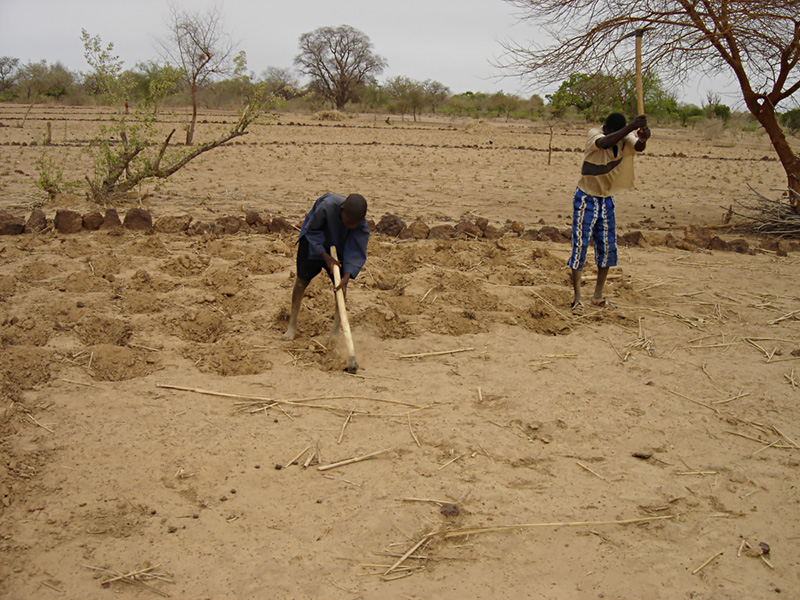
Combining ecosystem health with human well-being An ecological and socio-economic need For the last one and a half centuries, humanity has been wantonly eating away at its natural reserves. This situation has lead to two world crises that are intricately connected: An ecological crisis that entails losses in biodiversity and in ecosystem functions at the […]
Publication of “Ecological engineering for sustainable agriculture in arid and semiarid West african regions”
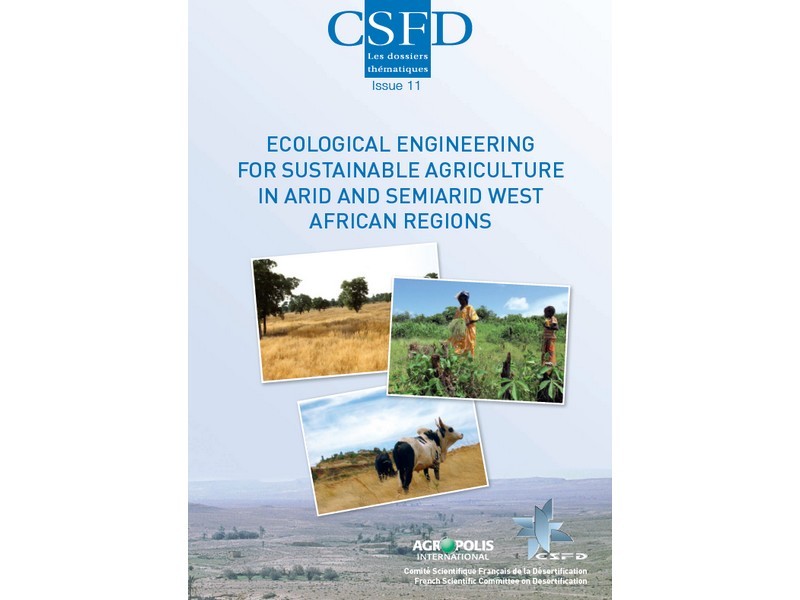
Based on the authors’ and contributors’ experience, West Africa is focused on to illustrate the ecological intensification to agricultural production in the broad sense. Examples from non-African tropical dryland areas worldwide are also discussed to illustrate the potential of agroecological engineering to sustainable land management and therefore to the fight against desertification. Dominique Masse (Agronomy-Ecology, […]
Science and civil society
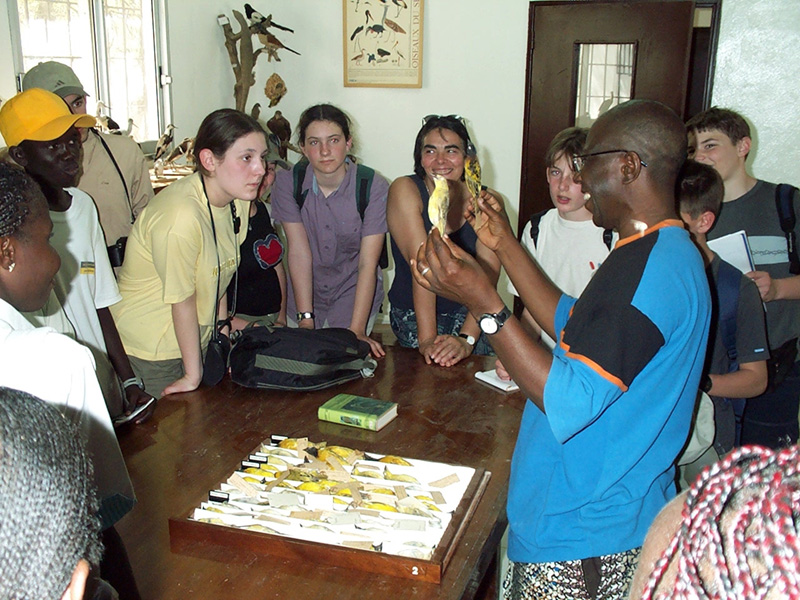
In the fight against desertification Scientific research in arid areas For a long time, agronomic research has been focused on basic and technical subjects, in view of a linear transfer to the farming world. The model was based on results obtained in station that were communicated to farmers via agents of extension services. This model […]
CARI – Centre d’Action et de Réalisations Internationales (France)
In brief Created in 1998, CARI is an organization for international solidarity or non-governmental organization (NGO) helping African populations in arid areas especially in Sub-Saharan Africa and in North Africa. • It works in fields like rural development and the land degradation control under the desertification and climate change.• It aims to the amelioration of the local […]
Droy Isabelle

Socio-Economist, researcher at IRD (Institute of Development Research), UMI (International Joint research Unit) Resiliences, IRD…
Official launch of the International Research Network RESET_GMV : Djibouti, 25-26th of April 2023 (Hybrid)
Official launch of the International Research Network RESET_GMV : Science for the new vision of the Great Green Wall
Biodiversity and land degradation in dryland regions – Importance of agrobiodiversity in oases
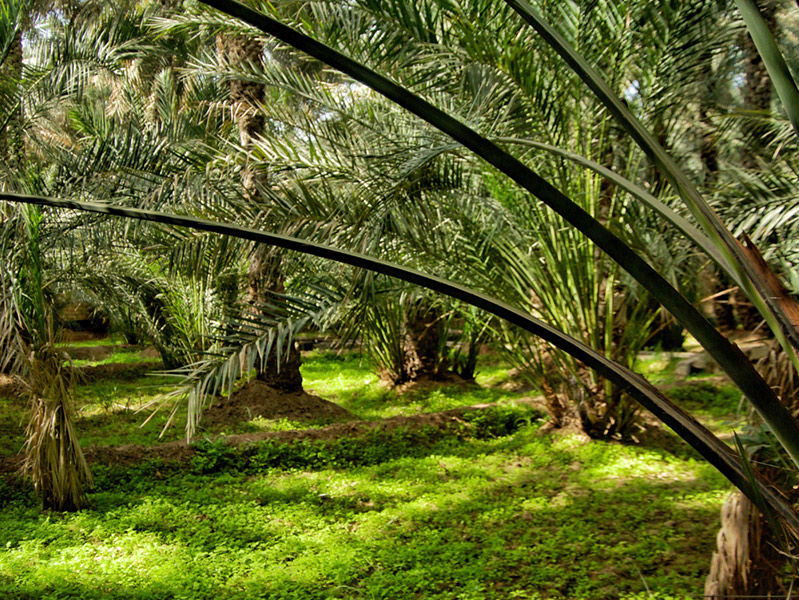
Traditional oasis farming systems consist of a palm grove with fruit trees (apricot, pomegranate, etc.), vegetable and/ or fodder crops growing in the understorey thereby forming a rich yet endangered oasis of agrobiodiversity. This agroforestry-based three-storied cropping system accounts for the so-called ‘oasis effect’, i.e. creation of a microclimate conducive to agriculture. Date palms filter […]
Ecological engineering
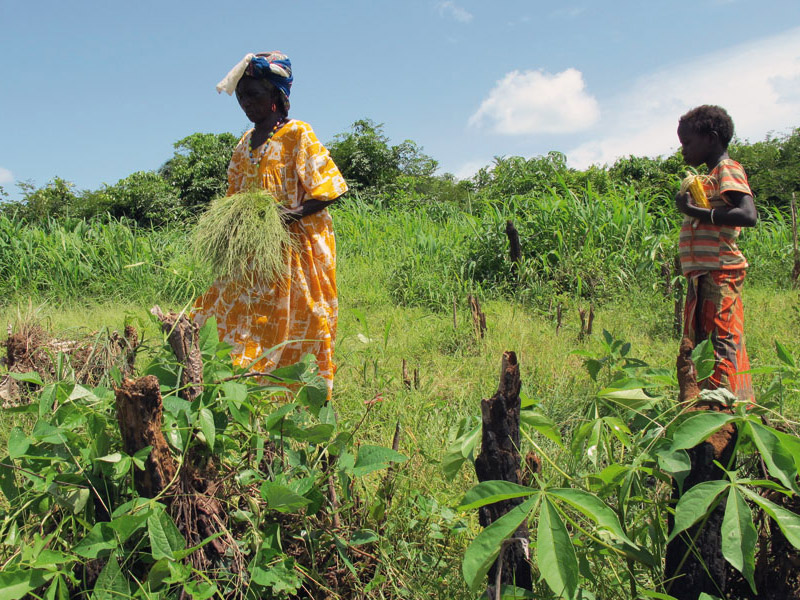
For sustainable agriculture in arid and semiarid West African regions Rethinking management of agricultural and natural systems through ecological engineering Arid and semiarid West African regions are characterized by heavy environmental constraints that have shaped natural ecosystems and human activities: low, infrequent, irregular, unpredictable rainfall concentrated within a period of a few monthssoils mainly with […]
Fighting wind erosion
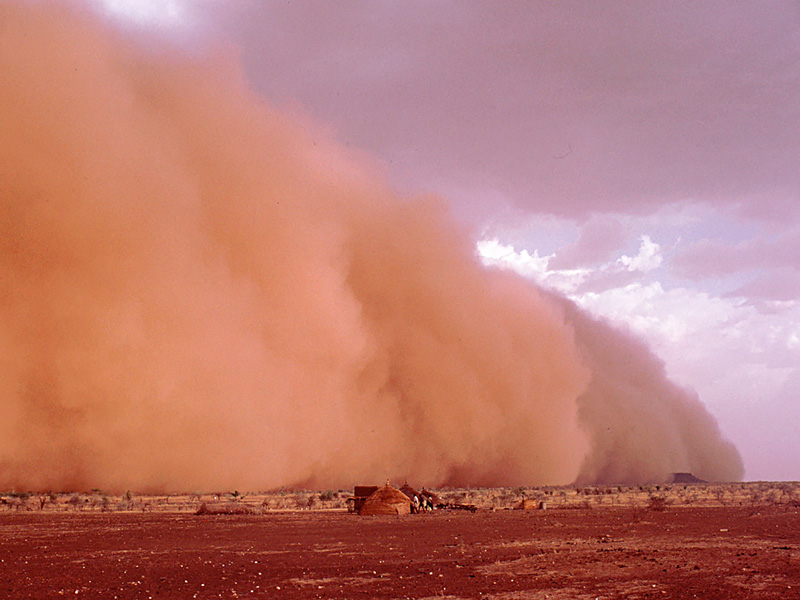
One aspect of the combat against desertification Wind erosion, a complex mechanism that degrades the environment Wind erosion is one of the most traumatic aspects of the desertification process. It leads to severe degradation of the environment, impoverishing soil as vast quantities of particles are carried away by the wind. It can be hard to […]
Is combating desertification a global public good?
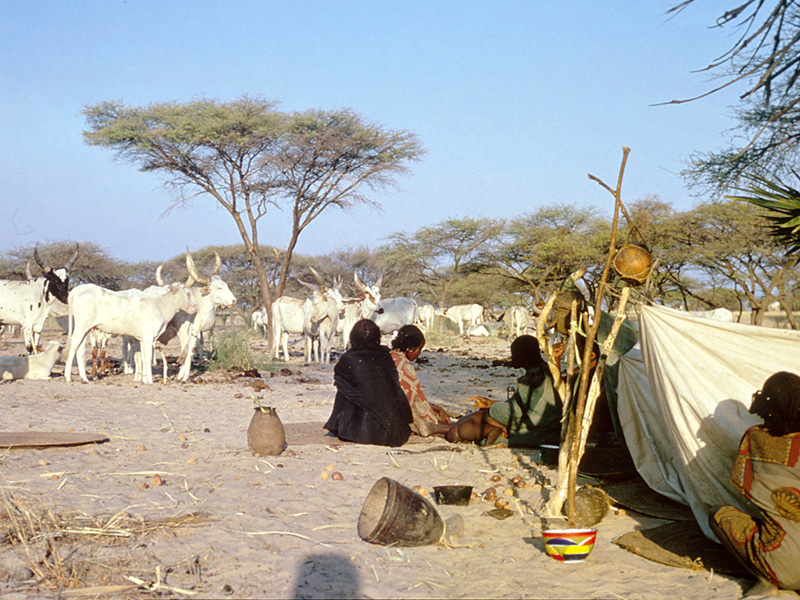
Elements of an answer… Desertification is a complex process involving climatic, biophysical and social factors, which leads to both decreasing natural environmental fertility and expanding poverty. It is therefore essential to improve the standard of living of the populations affected, while long-term supporting their activities, preserving land fertility and promoting other activities that should alleviate […]