
Land Resilience and Scientific Integrity: Ensuring the Conditions for Science to Engage at UNCCD-COP17
Recent international discussions have highlighted how challenging it can be to ensure that scientific perspectives are fully integrated and effectively heard in multilateral processes. Scientific knowledge, alongside contributions from civil society, is enabling increasingly accurate documentation of the extent of desertification and land degradation, as well as their mechanisms, dynamics, and consequences. We understand the […]
The CSFD attends the 6th Desertif’Actions Summit
The French Scientific Committee on Desertification (CSFD) is playing an active role in the 6th Desertif’Actions Summit. Working alongside scientists, institutions and non-governmental organisations, it is committed to strengthening the role of scientific knowledge in the fight against drought and land degradation. Through dialogue and mutual understanding, the CSFD will contribute to this year’s varied […]
Publication of the CSFD’s new thematic report on the links between demographic dynamics and desertification

What is the link between demographics and desertification?Are population growth, urbanization, and migration linked to land degradation in dry areas? The authors of this report show, through examples from different drylands around the world, that desertification and demographic dynamics are, in most cases, independent processes. The links between these processes, when they exist, are mostly […]
Webinar “Drought resilience: knowledge for action” the Thursday, 29 January 2026 10:15 a.m. – 12:00 p.m.

Background Drought is one of the most frequent and complex natural hazards affecting the environment, economies and populations worldwide. Over the last five years (2018-2022), areas affected by drought have increased by an average of 74% compared to the period 1981-2017. However, global drought trends are accompanied by significant uncertainties, and we have a poor […]
From Belém to Ulaanbaatar
From Belém to Ulaanbaatar
The Paris Agreement and land degradation neutrality,10 years of shared challenges, 10 years of actions to be scaled up
The 30th Conference of the Parties (COP30), scheduled to take place in Belém, Brazil, from November 10 to 21, 2025, will mark the 10th anniversary of the Paris Agreement – the first global and legally binding pact to limit global warming to “well below + 2°C and to pursue efforts to limit it to + 1.5°C.” This agreement introduced an innovative framework: each country must submit nationally determined contributions (NDCs) and review them every 5 years. Without this international cooperation, scientific data indicates catastrophic warming of +4°C by 2100, leading to devastating impacts on ecosystems, economies, and societies.
June 17, 2025 – Desertification and Drought day
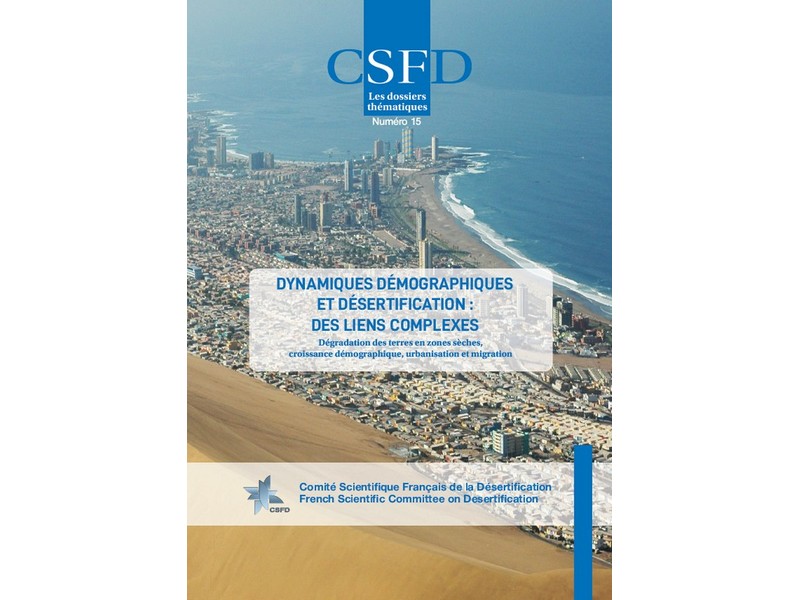
Release of the New CSFD Dossier on the Links Between Demographic Dynamics and Desertification What is the connection between demography and desertification?Are population growth, urbanization, and migration linked to land degradation in drylands? On the occasion of the Desertification and Drought day, CSFD is publishing its new thematic Dossier – the 15th in the series […]
[WEBINAR] Building Resilience in a Drying World: Economic and Policy Imperatives for Drought Action July 2nd 2025, 13:30 GMT – 15:30 CEST

Making the case for systemic drought response and NbS through the lens of desertification and UNCCD goals. This webinar offers a timely and policy-relevant dialogue that bridges science, governance, and nature-based investment—urging the international community to reinforce drought resilience as a core component of land restoration and climate adaptation strategies. When : July 2nd 2025, […]
Two members of the CSFD attended the 2nd International Congress on Oases and Date Palms in Ouarzazate (Morocco)
Organized under the High Patronage of His Majesty King Mohammed VI, the 2nd International Congress on Oases and Date Palms 2025 brings together researchers, decision-makers, development actors, and institutional representatives to discuss the crucial issues of sustainability in oasis ecosystems on May 22 and 23, 2025, in Ouarzazate. This event, led by the Moroccan Ministry […]
International Day for Biological Diversity 2025
Biodiversity and Land Degradation: A Common Fight! In dryland areas, combating land degradation not only secures the future of ecosystems but also helps preserve biodiversity and supports the sustainable development of human societies that are closely dependent on them. Measures aimed at improving, preserving, and restoring land are part of the shared solutions to tackle […]
Publication of a note on neutrality regarding land degradation in the Sahel through the lens of land tenure issues
Land neutrality, although a sustainable development goal, remains largely unknown outside of international environmental negotiation circles and academic circles dedicated to the subject. For the past 10 years, the United Nations Convention to Combat Desertification has volunteered to implement this goal in the regions under its mandate, namely arid, semi-arid, and dry sub-humid areas. A […]