
Dossiers

thématiques du CSFD

Dossiers tagged with: land degradation

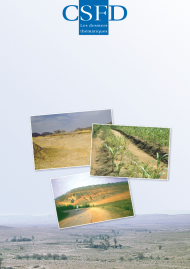
A land degradation assessment and mapping method
A land degradation assessment and mapping method A standard guideline proposal
8
2010
52 pp

Abstract

Arable land is a vital resource for humankind. Cultivation of this land generates food to meet the daily needs of the world’s population. This land is limited and the area is constantly shrinking—2 ha/inhabitant in 1900 versus 0.4 in 2010— due to the impact of human activities and population growth. Arable land is not a naturally renewable resource on the time scale of human evolution and is invaluable as it cannot be manufactured. This land therefore has to be properly managed. It is thus essential to understand the actual land degradation status so as to be able to draw up protection, restoration and/or sustainable management policies.

In 1990, the results of the first global land assessment were incomplete because of a lack of common assessment procedure. This CSFD Dossier describes a streamlined land degradation assessment method that can be applied on different spatial scales—farm to country—and in all climatic zones in worldwide.

The type, extent and degree (or severity) of land degradation are the three main indicators selected. When pooled, they represent a degradation index rating that is displayed in a simple way on maps that can be readily used by politicians, decisionmakers and the media. Complementary indicators are useful for staff responsible for implementing land degradation control initiatives in areas earmarked by decisionmakers: degradation rate and trend, historical background, soil sensitivity and resilience, possible causes, off-site effects, and rural population density.

The results obtained could contribute to meeting the objectives of the United Nations Convention to Combat Desertification, especially through national objectives in countries affected by desertification that must regularly report on land degradation.
2005
32 pp

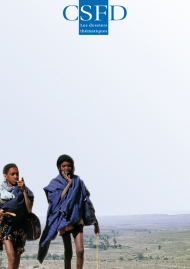
Abstract

Originally considered as a local development problem, combating desertification is viewed more and more as a global environmental issue at the international level. May combating desertification be considered a global public good? The document shortly describes the desertification problem, its extent and examples of available solutions for stopping it. However, the analysis of the links between desertification and social changes - particularly the ones that relate to migration, poverty and land tenure -, demonstrates the interest of broadening the traditional approach of combating desertification. Such a focus highlights the need for implementing a consistent set of interdependent actions to solve desertification problems. These actions should be designed in each situation at various levels, from local to global, and supported by as many specific institutional arrangements. The discussion brings into debate elements for deciding whether combating desertification should or should not be recognized as being a global public good and for identifying which new fighting mechanisms should be implemented at international levels. 

Support

Editing, production and distribution of Les dossiers thématiques du CSFD are fully supported by this Committee thanks to the support of relevant French Ministries and AFD (French Development Agency).

  • Ministère de l'Education nationale, de l'Enseignement supérieur et de la Recherche
  • Ministère des Affaires étrangères et du Développement international
  • Ministère de la Transition écologique et solidaire
  • Agence Française de Développement (AFD)

Opinions

The opinions expressed in these reports are endorsed by the Committee.

Contact

CSFD
Comité Scientifique Français de la Désertification
Agropolis International
1000 avenue Agropolis
F-34394 Montpellier CEDEX 5 • France
Tel.: +33 (0)4 67 04 75 73• email: csfd@agropolis.fr