Ecological engineering for sustainable agriculture in arid and semiarid West african regions
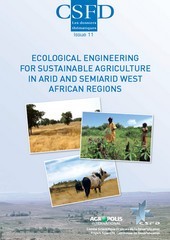
Over the past 10 years, the French Scientific Committee on Desertification has conducted a series of reviews and published many reports on topics that have seldom been investigated but are essential for the development of dryland areas— the contribution of direct-seeding mulch-based cropping systems, why we should invest in arid areas, restoring natural capital, pastoralism in dryland areas, and carbon in dryland soils. The Committee has played a pioneering role in these initiatives by dealing with cross-cutting issues focused on combating desertification and soil degradation, in addition to biodiversity preservation and the adaptation of farming systems to climate change.
This Dossier looks at potential contributions of ecological engineering to the management of agrosilvopastoral systems in sub-Saharan dryland areas, while helping to describe and define appropriate agroecological practices. Based on the authors’ and contributors’ experience, West Africa is focused on to illustrate the ecological intensification approach to agricultural production in the broad sense, which also takes livestock and forest production into account. Examples from non- African tropical dryland areas worldwide are also discussed to illustrate the potential of agroecological engineering in this climate setting.
The aim here is not to discuss all agricultural development related issues but rather to focus specifically on different examples we think are relevant to this ecological engineering approach. After reviewing a few key features of agriculture in dryland, arid and semiarid areas, examples of biological or ecological processes that could be adjusted to the benefit of agrosilvopastoral systems are covered. These examples address different key factors with regard to ecosystem functioning, including biodiversity, material and energy flows, and landscape ecology. The Dossier ends with a review of these so-called agroecological practices in the agricultural development socioeconomic context of arid and semiarid regions of West Africa. It was, of course, not possible to thoroughly assess all of the parameters. Essential issues such as land security with regard to restored plots, agricultural price stability and learning and support problems are thus not covered. It is essential that these ecological engineering techniques benefit family farms, which predominate in dryland regions.
This Dossier is being published at a time when international bodies are strongly encouraged to focus on halting biodiversity loss, storing more carbon and restoring land to hamper its degradation. The authors warrant praise for so clearly presenting sometimes complex, but inherently sustainable techniques.



L’ingénierie écologique
pour une agriculture durable dans les zones arides et semi-arides d’Afrique de l’Ouest